

Meet the five who keep ethics alive
During Ethics Week, we honor these journalists who did the right thing.
It’s been a rough year for journalism ethics, and we still have eight months to go.
During Ethics Week, we can already identify five brave souls and organizations for sticking to their ethics despite the price they’ve paid…
1. Associated Press
The highest-profile ethical battle of 2025 pits the most powerful man in the world against the world’s largest news agency.
By now, you probably know the story.
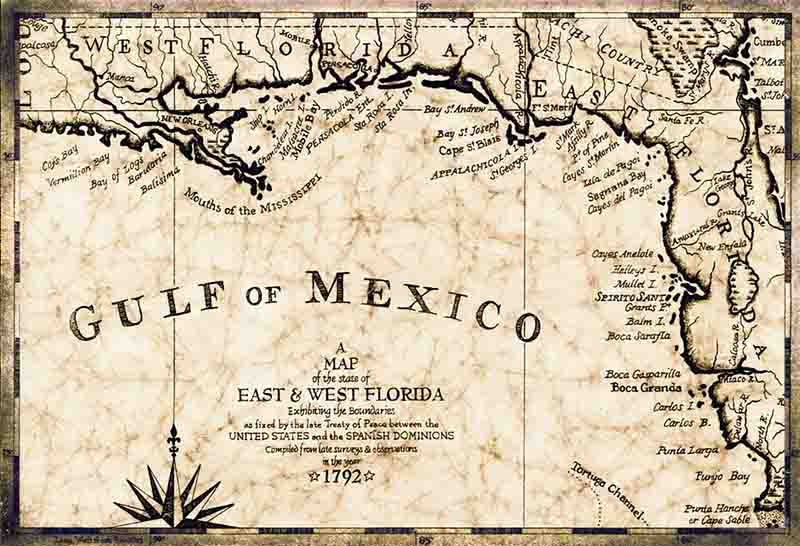
President Donald Trump banned the AP from the Oval Office and Air Force One because it continues to refer to the Gulf of Mexico instead of changing it to the Gulf of America.
The AP sued, and a federal judge (appointed by Trump) has ordered the White House to restore AP’s access to presidential events.
SPJ says…
What’s less-known is that AP agreed with President Trump and changed the name of North America’s largest peak back to Mount McKinley. President Obama had changed it to Denali in 2015.
The AP’s reasoning is both ethical and logical…
The area lies solely in the United States and as president, Trump has the authority to change federal geographical names within the country. The Gulf of Mexico has shared borders between the U.S. and Mexico. Trump’s order only carries authority within the United States. Mexico, as well as other countries and international bodies, do not have to recognize the name change.
“It would be easy, and understandable, to cave to intense pressure simply over a place name on a map or a story,” says former Ethics chair Andy Schotz. “But doing the right thing is not selective, dependent on whether it’s convenient, or comfortable.”
Schotz adds, “Relying on clear, sound reasoning, the AP has demonstrated for all, within journalism and beyond, that principles come first. Language and accuracy matter at all times, regardless of who throws a tantrum and how scathing that tantrum is.”
2. The resigners (and remainers)
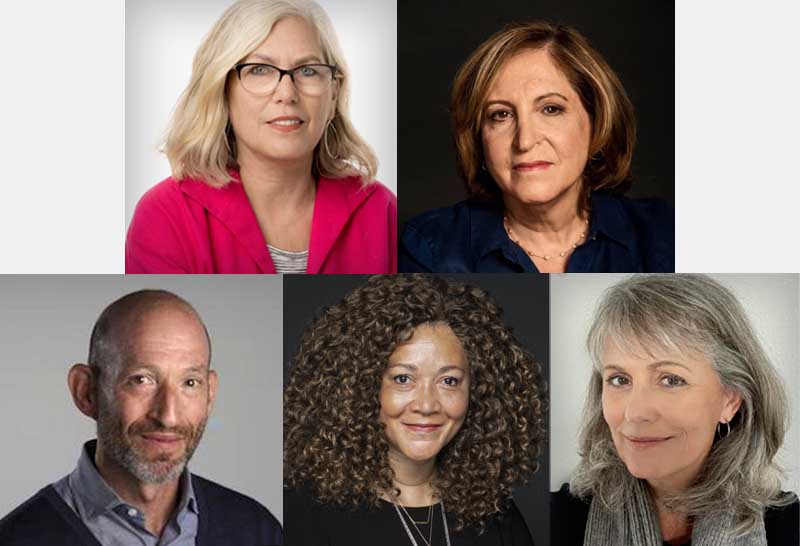
Mariel Garza. David Shipley. Ruth Marcus. Michele Norris. Ann Telnaes.
They worked at The Los Angeles Times and Washington Post. They all resigned since our last Ethics Week:
- Mariel Garza resigned in October as the Los Angeles Times editorials editor after the paper refused to endorse a candidate for president.
- Michele Norris resigned as a Washington Post columnist at the same time for the same reason as Garza, when her paper made the same decision.
- Ann Telnaes was a Pulitzer-winning cartoonist for the Washington Post when she resigned in January after her cartoon mocking owner Jeff Bezos was rejected.
- David Shipley resigned as Washington Post opinions editor in February after Bezos announced a new policy: “We are going to be writing every day in support and defense of two pillars: personal liberties and free markets. We’ll cover other topics too of course, but viewpoints opposing those pillars will be left to be published by others.”
- Ruth Marcus resigned as a Washington Post opinion columnist and associate editor in March after she said the paper wouldn’t run her critique of Bezos’ new policy.
This isn’t a complete list. Many others in important roles also left the Times, Post, and other news outlets. We just don’t have time to list them all.
SPJ says…
You don’t have to agree why these journalists resigned. And in fact, several members of the Ethics Committee have disputed their reasons. But resigning over your beliefs can be the epitome of journalism ethics.
The SPJ Code of Ethics says journalists should expose unethical conduct in journalism, including within their own organizations and to abide by the same high standards they expect of others.
Then again, not resigning can also be ethical.
“Some believed that staying in their roles would compromise them ethically, while others thought it was improper to vacate their positions for another journalist who might not care as much,” says Ethics Committee member Chandra Bozelko. “The beauty of all these career decisions is that they show that reasonable, honorable people can disagree on matters of importance — and that is what ethical opinion journalism is all about.”
3. NABJ
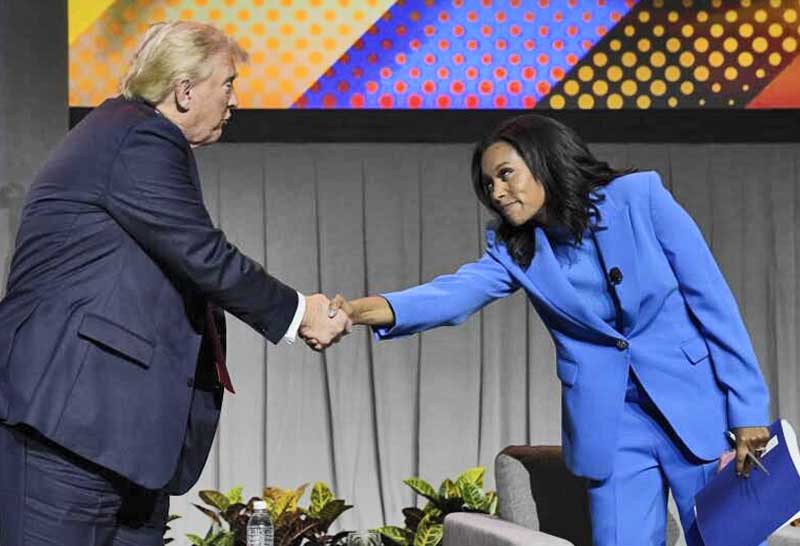
It seems like a million years ago, but it was only last August when the National Association of Black Journalists interviewed Donald Trump onstage at its national convention.
A day after the interview was announced, the convention’s co-chair stepped down. The president of the Philadelphia Association of Black Journalists called the invitation “irresponsible and intellectually dishonest.” An unknown number resigned their memberships, with some calling out NABJ on social media
The interview, of course, produced a newsworthy moment when Trump questioned Kamala Harris’s race: “I don’t know, is she Indian or is she Black?” But the question stands: Was the invitation – and the interview – ethical?
SPJ says…
Whether you agree with NABJ’s decision, and you can certainly disagree, SPJ ethics chair Michael Koretzky says it was handled properly…
- Kamala Harris was also invited but said she had a scheduling conflict.
- NABJ had a trio of interviewers: ABC News senior correspondent Rachel Scott, Semafor politics reporter Kadia Goba, and Fox host Harris Faulkner. NABJ members protested Faulkner’s involvement, but the balance was laudable.
- Politifact provided real-time fact-checking to prevent Trump from spreading disinformation, and the interviewers also corrected him onstage.
- For NABJ members who expressed concern the convention was no longer a “safe space,” the Trump interview was not a keynote. That meant other programming didn’t stop, so attendees had a choice.
Koretzky also points out how NABJ hewed to several sections of the SPJ Code of Ethics…
- Seek Truth and Report It.
- Diligently seek subjects of news coverage to allow them to respond to criticism or allegations of wrongdoing.
- Support the open and civil exchange of views, even views they find repugnant.
Koretzky adds, “This doesn’t mean NABJers who resigned their membership in protest are somehow unethical. Like we’ve already mentioned, such a move can be just as ethical. Two wrongs don’t make a right, but two rights don’t make a wrong, either.”
4. Indiana Daily Student
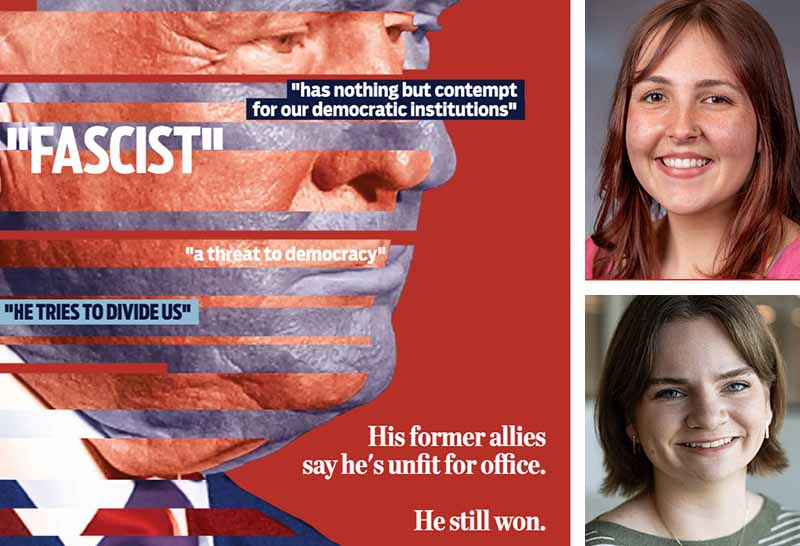
The day after Donald Trump was elected president, the student newspaper at Indiana University published a provocative – but accurate and ethical – front page. The image of Trump was covered with derogatory quotes from his former employees and allies.
That was enough for Indiana’s newly elected lieutenant governor to post on X…
This is WOKE propaganda at its finest and why most of America looks at higher education indoctrination centers like IU as a complete joke and waste of money. This type of elitist leftist propaganda needs to stop or we will be happy to stop it for them.
That sure sounded like a threat, but the Indiana Daily Student didn’t flinch. Instead, they calmly covered the story (which was also covered by news outlets nationally). Then they just calmly invited Beckwith for an interview, which he accepted. The Daily Student ran it as a Q&A to ensure no one could claim Beckwith’s words were manipulated.
Finally, the newspaper scheduled a town hall so the Indiana University community could speak directly with the staff about its coverage of this and other stories. Needless to say, what could have been a disaster became a lesson in how news media should respond to unfounded attacks – taught by college journalists.
SPJ says…
This isn’t about politics.
“Lt. Gov. Beckwith certainly had the right to be offended by the student newspaper and its criticisms of Donald Trump,” says former SPJ Ethics chair Danielle McLean. “And he had the right to express his displeasure that public funds may have been used to fund the publication.”
But McLean adds..
“He does not have the right to impede on the student newspaper’s ability to express their First Amendment rights. The Indiana Daily did an admirable job covering this issue amid attacks by soon-to-be powerful forces in the government. They followed SPJ’s Code of Ethics to a T as they continued their dedication to truth and transparency under challenging and, I assume, scary circumstances.”
Here’s how those students followed the Code…
- Acted independently as it resisted external pressure to influence coverage.
- Followed the key value to Be accountable and transparent as they explained their choices.
- The town hall followed the SPJ Code’s call for journalists to encourage a civil dialogue with the public about journalistic practices, coverage and news content.
5. Jeffrey Goldberg
The Atlantic editor-in-chief was added, apparently by mistake, to a high-level group chat on the publicly available Signal app about the Trump administration’s plans for military strikes in Yemen.
SPJ says…
“His published responses were in keeping with important principles of the SPJ Code of Ethics,” former SPJ Ethics Chair Fred Brown says.
Brown said Goldberg minimized harm by not including details of the attack plans in his initial report. In fact, he left the chat when he learned that it was not a hoax, as he had thought at first.
It’s the sort of information that normally would be classified, with the rationale that making it public could increase the danger to military personnel.
Then, when administration officials tried to downplay their blunder by saying it was just a glitch and the material wasn’t really classified, anyway, Goldberg responded — correctly once again — by revealing exactly what was in those text exchanges. In other words, if it wasn’t really top secret, it should be OK to show what it was, right?
“Or, to paraphrase the SPJ code, to report the truth,” Brown says.
 SPJ Ethics