
An ethics program splits SPJ

By Michael Koretzky
SPJ ethics chair
“Crass.” “Sad.” “Bonkers.”
“Reckless.” “Irresponsible.” “Tone deaf.”
“I’m disappointed and disgusted,” a j-school administrator said.
“The SIN ethics program has got to be one of the most ill-conceived ideas that SPJ has ever come up with,” a communications professor said.
That’s just a tiny-pink-spoon-at-Baskin-Robbins taste of the social media hate and email condemnations SPJ received in the days leading up to Ethics Week.
So the “SIN ethics program” must be awful, right?
Except SPJ funded Spread Immoral News nationwide 12 years ago, and no one complained. What changed?
“In these times…”
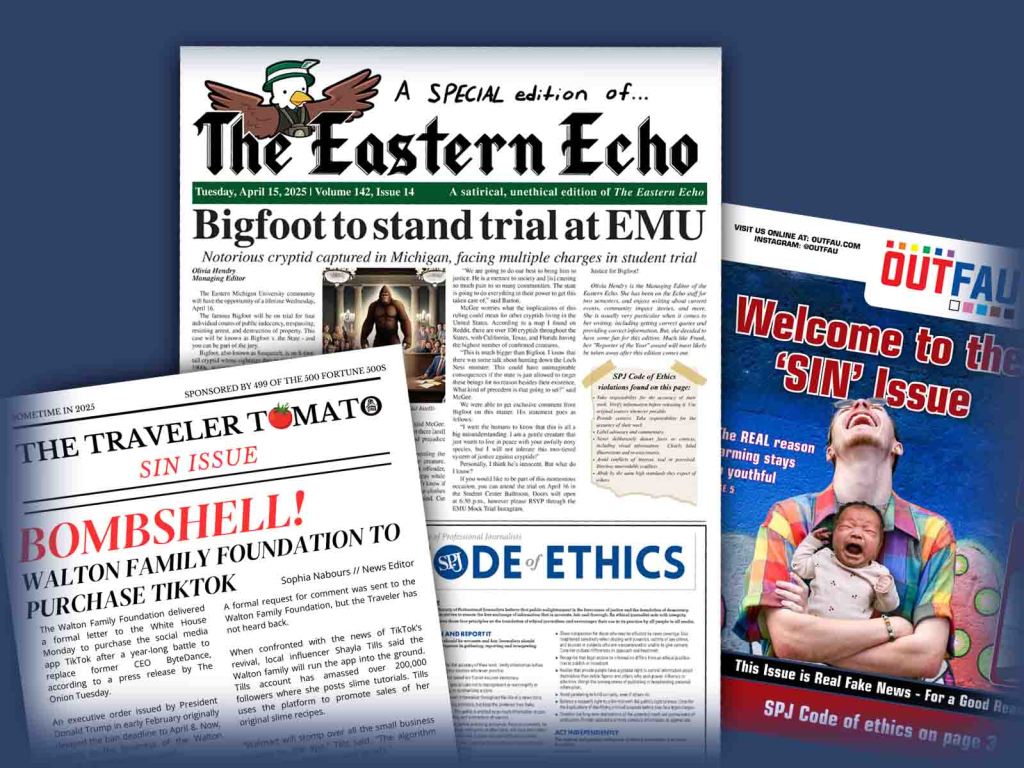
SIN is basically a college parody issue with a mission: Show readers just how ethical journalists are by violating as much of the SPJ Code of Ethics as possible.
To truly teach that lesson means publishing the Code, writing an explanatory letter from the editor, and describing which parts of the Code are being broken on each page.
That was just fine in 2013. But not today, “at a time when journalism’s most powerful enemies are jumping at any chance they can to discredit the field,” one sports reporter said.
“We understand that the program has been successful in the past, but times have changed,” wrote nine former SPJ leaders in an open letter to me and SPJ’s board of directors. “Have you considered how it will affect SPJ’s reputation?”
One member of the Ethics Committee signed the letter. One other didn’t but agreed with the sentiment.
Since SIN was my idea a dozen years ago, I obviously don’t believe we should censor ourselves because Donald Trump is president. Interestingly, the SPJ leaders who are under 40 mostly agreed with me. Those over 40 mostly didn’t.
One of the youngest SPJ board members put it best in a reply to that open letter…
A lot of people I respect are really upset by SIN, and I understand why given the media climate, but I also think this idea that journalists can’t ever have fun, or joke, or do something creative out of fear it will be misinterpreted is part of the reason why the general public does not think favorably of our profession. We think audiences are incapable of rising to the occasion of comprehension (which can be true!) but that level of patronizing – to me – is more harmful than SIN, which is a teaching project. Nothing more, nothing less.
The emphasis was hers. And now they’re mine, too.
What the winners think
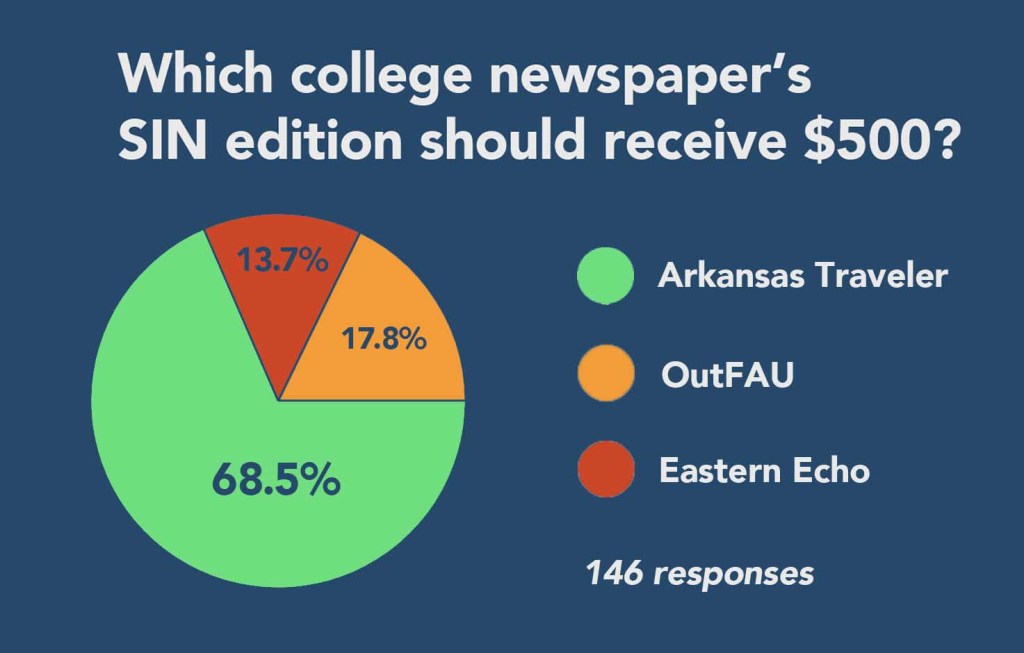
Despite calls to cancel SIN, a couple of judges chose a winner, and an online poll backed them up exactly…
- First place: The Arkansas Traveler (University of Arkansas)
- Second place: OutFAU (Florida Atlantic University)
- Third place: The Eastern Echo (Eastern Michigan University)
When I asked these winners why they did a SIN edition, their replied with the same reason so many older journalists thought it as a terrible idea. They said it was important “in these times.”
Here’s Arkansas Traveler EIC Jenna Weyforth…
I think a lot of student journalists are fired up right now, and we were certainly excited to show how much ethics matter within the industry and to the public. This was a great learning experience that allowed us to break the rules in a controlled context and discuss ethics in a different way. It goes to show how important transparency is in journalism and the ethical codes we follow every day that some people may not be aware of.
And Eastern Echo EIC Ameera Salman…
One of the biggest reasons I wanted to do this was to show just how important journalism is when it’s done right. We live in a never ending heavy news cycle, so I think we all enjoyed a chance to look at things with a softer gaze. I think this experience really solidified how important ethics are for journalists. It also taught me just how much some of our audience doesn’t know about our mission and our ethics. There’s so much negativity about journalism and the media – some of which is warranted – but I hope that issues like this give people insight into what we are trying to accomplish.
But what about the feedback? And blowback? Was journalism’s reputation damaged on their campuses?
At the University of Arkansas, Weyforth says, “I’ve heard a lot of positive feedback.” At Eastern Michigan, it’s more compicated. Salman says: “I’ve heard a lot of feedback – good and bad. I appreciate the people who took the time to read the entirety of the issue and really understand why we did what we did. I think some of the negative feedback just came from not giving a close enough look.”
One day later
Ethics Week ended yesterday. SPJ – and journalism – are still standing. SIN shattered neither.
What could’ve been a worthy debate about the value of the “SIN ethics program” instead went supersonic-hyperbolic in a way most journalists decry when others do it.
I spent my Ethics Week replying to as many upset individuals as I could. I invited them to reserve judgment until they saw the finalists. My favorite reply…
While I had reservations about this contest and remain concerned about its optics, the students understood the assignment and made it very clear on every page that this news is not to be taken seriously. They detailed how the ethics code applies in every possible aspect of a news publication, and hopefully it was a solid learning experience for them.
If we’ve learned anything from last week, maybe it’s this: Ask questions before posting condemnations. That’s the journalistic thing to do.

 SPJ Ethics