
Sometimes the most ethical thing to do is nothing
By Michael Koretzky
SPJ ethics chair
Even when journalists are ethical, it can be controversial.
When police found Luigi Mangione in a McDonald’s last week in Altoona, Pennsylvania, they arrested him for killing UnitedHealthcare CEO Brian Thompson.
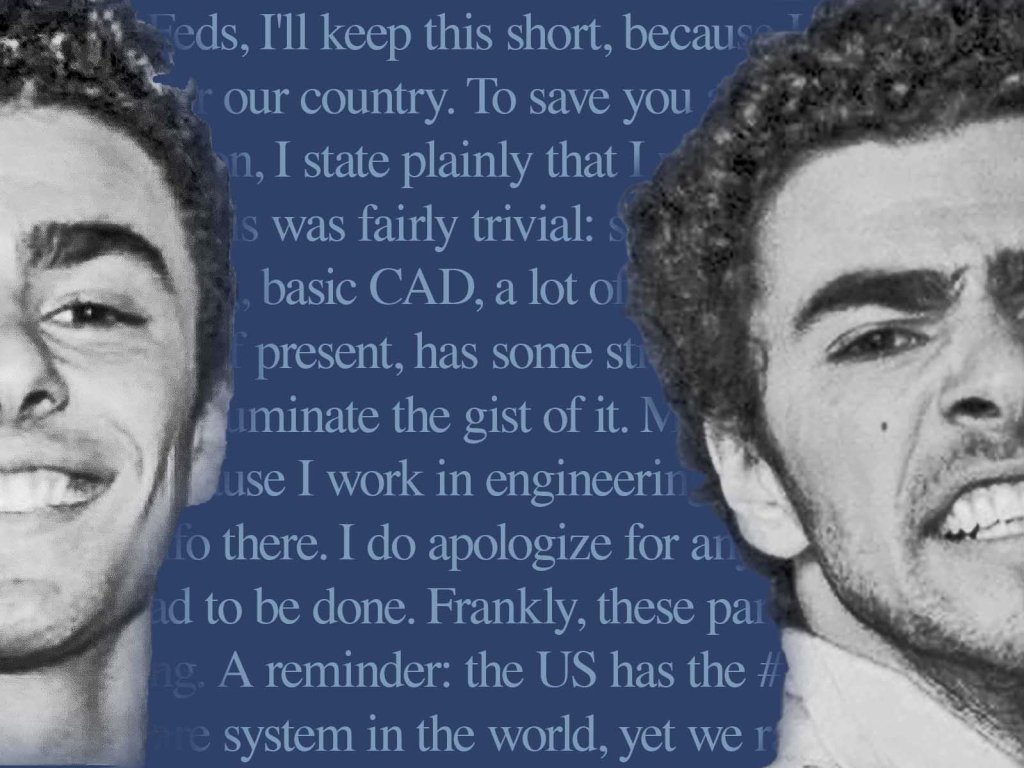
The news media reported that Mangione was carrying a gun, bullets, multiple fake IDs, and “a handwritten document.”
It was deemed his “manifesto.”
Unlike other manifestos from accused kiillers, this one was short: 262 words. By comparison, Ted Kaczynski (aka the Unabomber) wrote 35,000 words. In fact, USA Today reported that Mangione had read Kaczynski’s manifesto online and left a comment several times longer than his own manifesto.
A manifesto conspiracy?
Maybe because Mangione’s manifesto was so brief, many people wondered why the news media didn’t post it online in its entirety.
Some had theories. Like this Instagram post from fashion bloggers/consultants Diet Prada, which has nearly 65,000 likes over the past seven days…
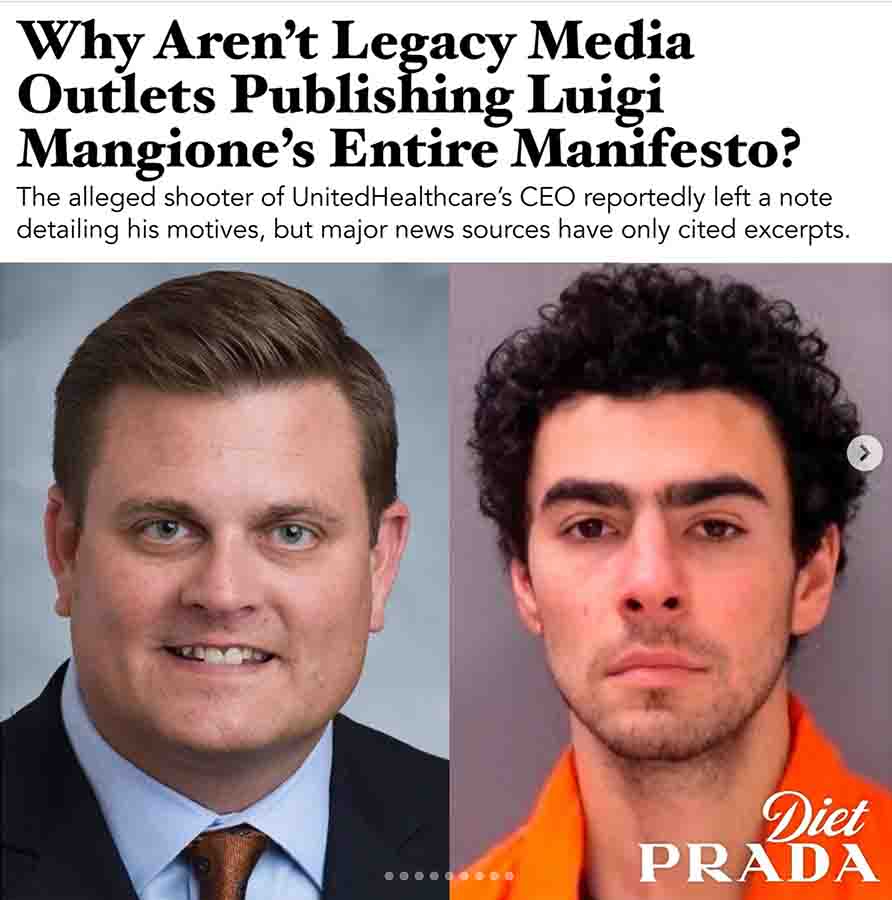
In that post, Diet Prada cites critics (without ever naming them)…
Critics speculate conflicts of interest with the healthcare industry as the reason behind major news orgs withholding the full manifesto.
The proof?
For example, Beth Brooke, a board director for NYT, also serves the Board of Directors at eHealthInsurance. Madeline Bell, a board director for Comcast (which owns NBC) is also the CEO of Children’s Hospital of Philadelphia. Paula Price, a board member for Warner Bros. (which owns CNN) previously served as Senior VP of Aetna, a health insurance company.
This evidence is so wafer-thin, it’s an insult to wafer-makers everywhere. Even the lightest of Googling reveals these news outlets have criticized the healthcare industry often and enthusiastically.
In September, NBC News ran this story: “North Carolina hospital company forgives debts of 11,500 people after NBC News report.” In October, The New York Times reported, “How Taxpayers Are Helping Health Insurers Make Even Bigger Profits.” In November, CNN republished ProPublica’s investigation, “Inside the company helping America’s biggest health insurers deny coverage for care” – which calls out Aetna by name.
Manifesto ethics
Here’s the real reason news outlets aren’t publishing Mangione’s manifesto: They don’t think it’s ethical.
“It encourages copycats,” says past SPJ ethics chair Fred Brown. To understand why means embracing a contradiction.
Study after poll after focus group has shown just how little the public trusts journalists. Just a few weeks ago, the Pew Research Center said many Americans are “as likely to trust info from social media as from national news outlets.”
Yet the mainstream media is still so powerful, they can influence the stories they cover. For example, there’s compelling evidence that major news outlets reporting on suicide might cause more suicide.
(Or as one academic study put it, as only academics can: “Reporting and portrayal of suicidal behaviour in the media may have potentially negative influences and facilitate suicidal acts by people exposed to such stimuli.”)
The same thing might be happening with manifestos.
“When a mass shooting event occurs, there is generally extensive media coverage,” concludes a study from the University of Memphis. “This coverage often repeatedly presents the shooter’s image, manifesto, and life story and the details of the event, and doing so can directly influence imitation.”
This is why journalists today are much more sensitive about accidentally glorifying murderers. In 2016, when I sat on SPJ’s national board, I invited a group called NoNotoriety to speak at our annual convention.
Caren and Tom Teves started NoNotoriety in 2012, shortly after their son Alex was shot dead in an Aurora, Colorado movie theater while shielding his girlfriend from gunfire. The Teveses were stunned and outraged when the shooter – who killed 12 and injured 70 – was all over the news while their son was barely mentioned.
“Notoriety is a known and consistent motivating factor of rampage mass shooters,” they said at our panel discussion. I believed them, and the research has since supported them.
Instead of manifestos
“There’s a risk of being a conduit, possibly to foment hate,” says former SPJ ethics chair Andy Schotz. “The middle ground is to do journalism.We review information, synthesize, summarize – just as we would in many other situations.”
And that’s exactly how the mainstream coverage has played out. Meanwhile, if you want to read Mangione’s manifesto, it’s not hard to find online. And that might be the perfect balance, because few killers will find the notoriety they seek in a Substack post.
“Just because something is published somewhere else doesn’t mean it should automatically be reproduced by journalists,” says former SPJ ethics chair Andrew Seaman. “As for manifestos, journalists should treat them like any other piece of information. Does that mean you automatically publish it in its entirety? No. You need to put everything into context. If it’s necessary to tell the story, you can summarize or quote selectively.”
So consider this SPJ’s manifesto on manifestos.

 SPJ Ethics